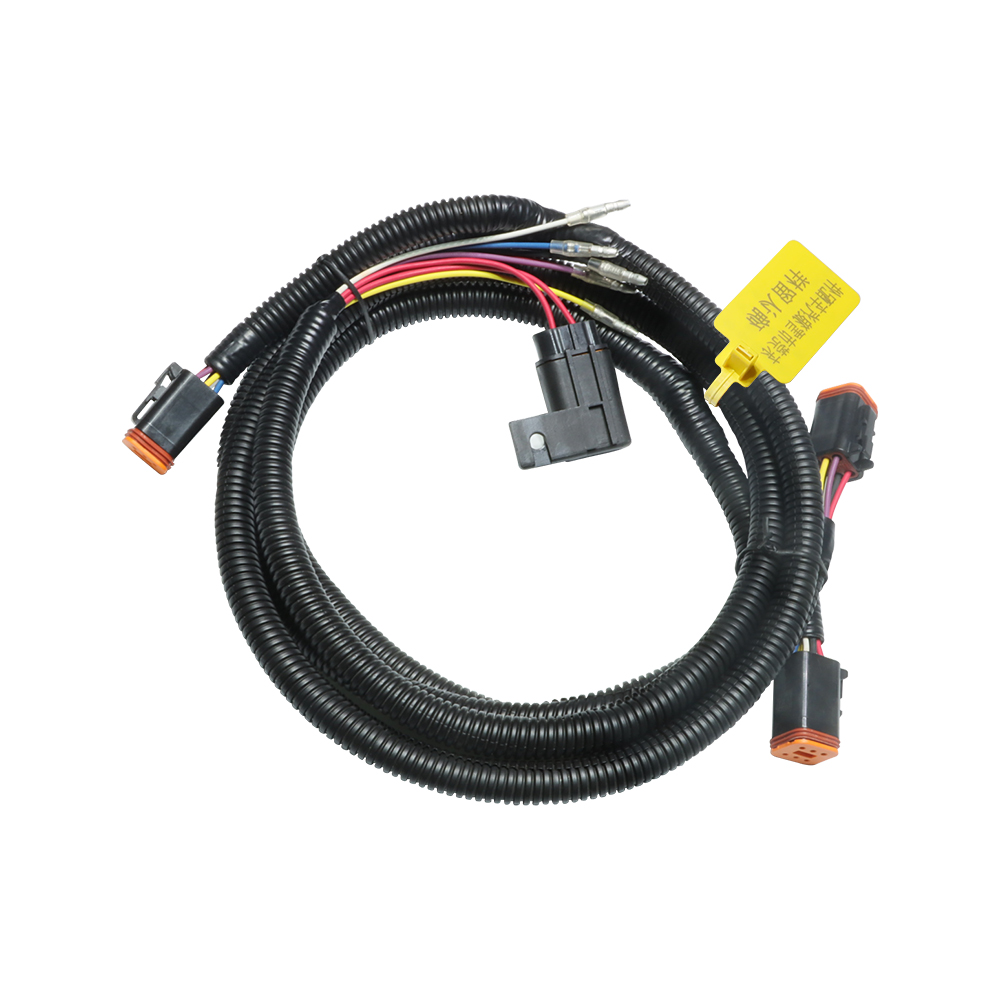
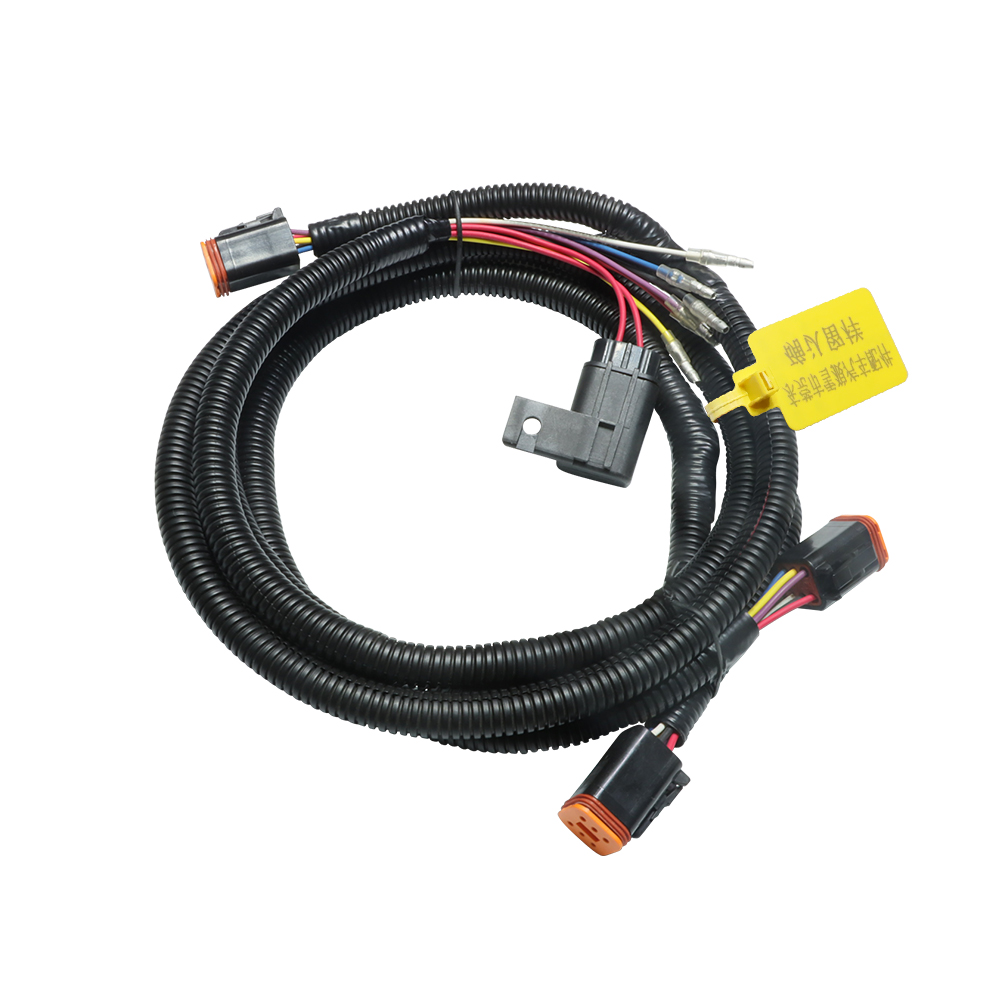
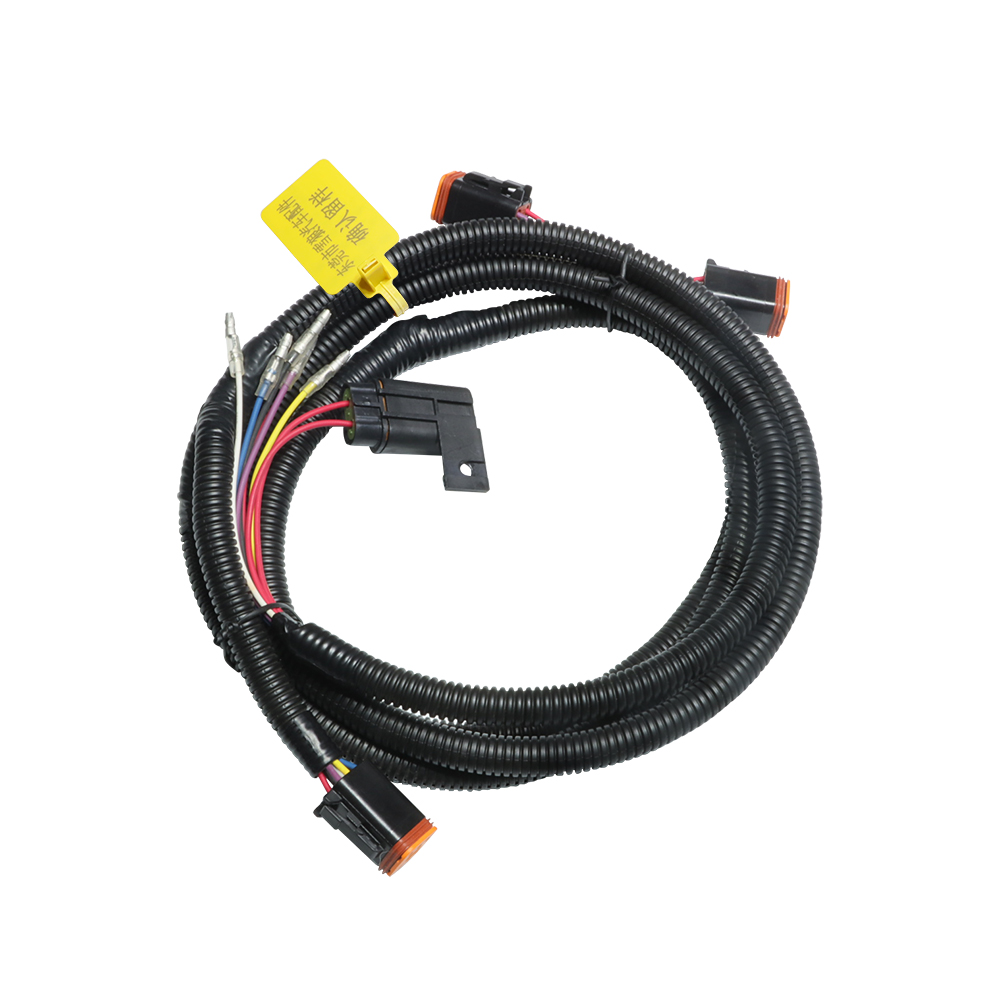
The core role of the wiring harness
Power transmission: supplying power to lights, motors, sensors, etc.
Signal transmission: connect ECU (Electronic Control Unit), sensors, actuators, etc. to realize data exchange.
System Integration: Reduce loose wiring and improve vehicle reliability.
Second, the composition and structure of the wiring harness
Wire:
Material: copper core (good conductivity), aluminum core (lightweight).
Insulation: PVC, cross-linked polyethylene, etc., high temperature and oil resistance.
Connectors:
Male and female plugs, waterproof connectors (such as engine compartment wiring harness).
Protective design:
Bellows: abrasion resistant, flame retardant.
Tape wrapping: fixes the wiring harness and reduces vibration abrasion.
Shield: prevent electromagnetic interference (such as ABS sensor wire).
Third, the common types of wiring harness
Engine wiring harness: connecting the ignition system, sensors, high temperature resistant design.
Body wiring harness: through the car, connecting instrumentation, air conditioning, audio, etc..
Chassis wiring harness: connecting ABS, suspension sensors, need to prevent stone strikes, waterproof.
New energy high-voltage wiring harness (electric vehicle): orange insulation, transmission of high-voltage electricity, need to be strictly shielded.
Fourth, wiring harness failure and troubleshooting
Common failure phenomenon:
Intermittent failure of lights/equipment.
Short-circuit resulting in a blown fuse.
Wiring harness aging and cracking, resulting in a broken circuit.
Loose or corroded connectors.
Troubleshooting Steps:
Visual Inspection: check for broken wiring harness sheath and loose connectors.
Multimeter test:
Conductivity: Measure the resistance of the line (normal value close to 0Ω).
Short to ground: detect whether the line and the body is abnormal conduction.
Replacement method: When suspecting a certain section of the wiring harness, replace the test with a known good wiring harness.
V. Maintenance and repair recommendations
Preventive maintenance:
Regularly check the wiring harness at the engine compartment and door hinges (prone to wear and tear).
Avoid wiring harness contact with hot parts (e.g. exhaust pipe).
Repair method:
Minor damage: wrap with insulating tape, or heat-shrink tubing to repair.
Severe damage: replace the whole section of the harness (need to match the original specification).
Connector repair: clean the contacts and replace the damaged pins.
Modification Notes:
Retrofit devices need to be routed separately to avoid damaging the original wiring harness.
Use standardized wires and fuses.